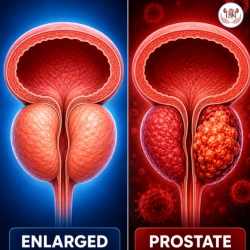

Enlarged Prostate vs. Prostate Cancer
As men get older, they start to worry about their prostate health. Two big concerns are an enlarged prostate and prostate cancer. These two conditions affect the prostate gland and can cause similar problems when you try to urinate but they are actually very different in terms of what causes them, the risk they pose, how they are diagnosed, and how they are treated.
A lot of men get confused between an enlarged prostate and prostate cancer. This can cause them to feel anxious or even delay going to see a doctor. It is really important to understand the difference between these two conditions so you can take care of your reproductive health.
What is an enlarged prostate?
An enlarged prostate occurs when your prostate gland gets bigger. This is also called Benign Prostatic Hyperplasia or BPH for short. It is a common condition that affects men over the age of 50.
When your prostate gets bigger, it can squeeze against the tube that carries urine out of your body. This can make it hard to urinate normally. Even though BPH can really affect your quality of life, it is not cancer. It does not directly increase your risk of getting prostate cancer.
Some common symptoms of an enlarged prostate are:
- You have to urinate a lot at night
- Your urine stream is weak
- You have trouble starting to urinate
- You dribble after you urinate
- You feel like your bladder is not completely empty
- You really need to urinate all of a sudden
What is prostate cancer?
Prostate cancer happens when abnormal cells in your prostate gland start to grow out of control. It is one of the common types of cancer that men get. Unlike BPH, prostate cancer can spread to parts of your body if you do not get it diagnosed and treated on time.
At first, prostate cancer might not cause any symptoms that you notice. This is why it is so important to get check-ups and screenings to make sure your prostate is healthy.
Some common symptoms of prostate cancer are:
- You have trouble urinating
- Your urine stream is weak or stops.
- You see blood in your urine or semen
- It hurts when you urinate
- You feel uncomfortable in that area
- You have trouble getting an erection
- You have pain in your bones if the cancer has spread
Some symptoms of BPH and prostate cancer are the same, you need to see a doctor who specializes in the system, called a urologist, to get an accurate diagnosis.
What are the main differences between an enlarged prostate and prostate cancer?
Although both conditions affect your prostate gland, there are some differences:
1. Kind of Condition :An enlarged prostate is not cancer, but prostate cancer is a disease that needs to be treated right away.
2. The amount of risk it poses to your life: BPH is generally not life-threatening. Prostate cancer can be serious if it spreads beyond your prostate gland.
3. Speed of Growth: BPH usually grows in the middle of your prostate around the tube that carries urine. Prostate cancer often starts on the outside of your gland.
4. Symptoms: Both conditions can cause problems with urination. Blood in your urine, unexplained weight loss, and bone pain are more likely to be symptoms of prostate cancer.
5. Treatment:Treatment for an enlarged prostate might include changing your lifestyle, taking medicine, or having a procedure. Treatment for prostate cancer depends on how advanced it is. It might include surgery, radiation, hormone therapy, or just keeping an eye on it.
How are these conditions diagnosed?
Because an enlarged prostate and prostate cancer can cause symptoms, your doctor needs to do a thorough evaluation.
Your urologist might recommend:
- A blood test to check for a protein called PSA (Prostate-Specific Antigen)
- A digital rectal exam
- An ultrasound of your prostate
- An MRI scan if needed
- A biopsy of your prostate if your doctor thinks you might have cancer If you get diagnosed early, you are more likely to have an outcome and avoid complications.
When should you see a urologist?
A lot of men ignore problems with urination, thinking it is part of getting older. You should not ignore these problems.
You should see a urologist if you:
- Have to urinate a lot at night
- Have trouble passing urine
- Have a urine stream
- See blood in your urine
- Have pain in your area that will not go away
- Notice sudden changes in how you urinate
Lorem ipsum dolor sit amet, consectetur adipiscing elit. Ut elit tellus, luctus nec ullamcorper mattis, pulvinar dapibus leo.
Expert Prostate Treatment in Indore
If you get help right away, you can figure out whether you have an enlarged prostate, prostate cancer, or something else.
If you are looking for the best prostate doctor in Indore, Dr. Vipin Sharma is a great choice. He is one of the top urologists in the city and can help you with an enlarged prostate, prostate cancer, kidney stones, and other urinary problems.
Dr. Vipin will work with you to figure out what is going on and create a treatment plan that’s just for you.
Conclusion
As you get older, you will experience a lot of changes. You should never ignore problems with urination. An enlarged prostate and prostate cancer might seem similar at first, but they are actually very different. The good news is that both can be managed if you catch them early.
If you or someone you care about is having problems with their prostate, do not just guess what is going on or look it up on the internet. You should see a urologist who can give you an answer and help you get the right treatment. Taking care of your prostate health now can make a difference in how you feel tomorrow.